Portfolio

TRE-DF:
Demand management

How I structured the experience of a platform that centralizes logging and tracking internal requests.

Client TRE-DF · with UnB
Product DFD management
Role UX Designer / UI Designer
Year 2025
Foundation GOV.BR guidelines
View case
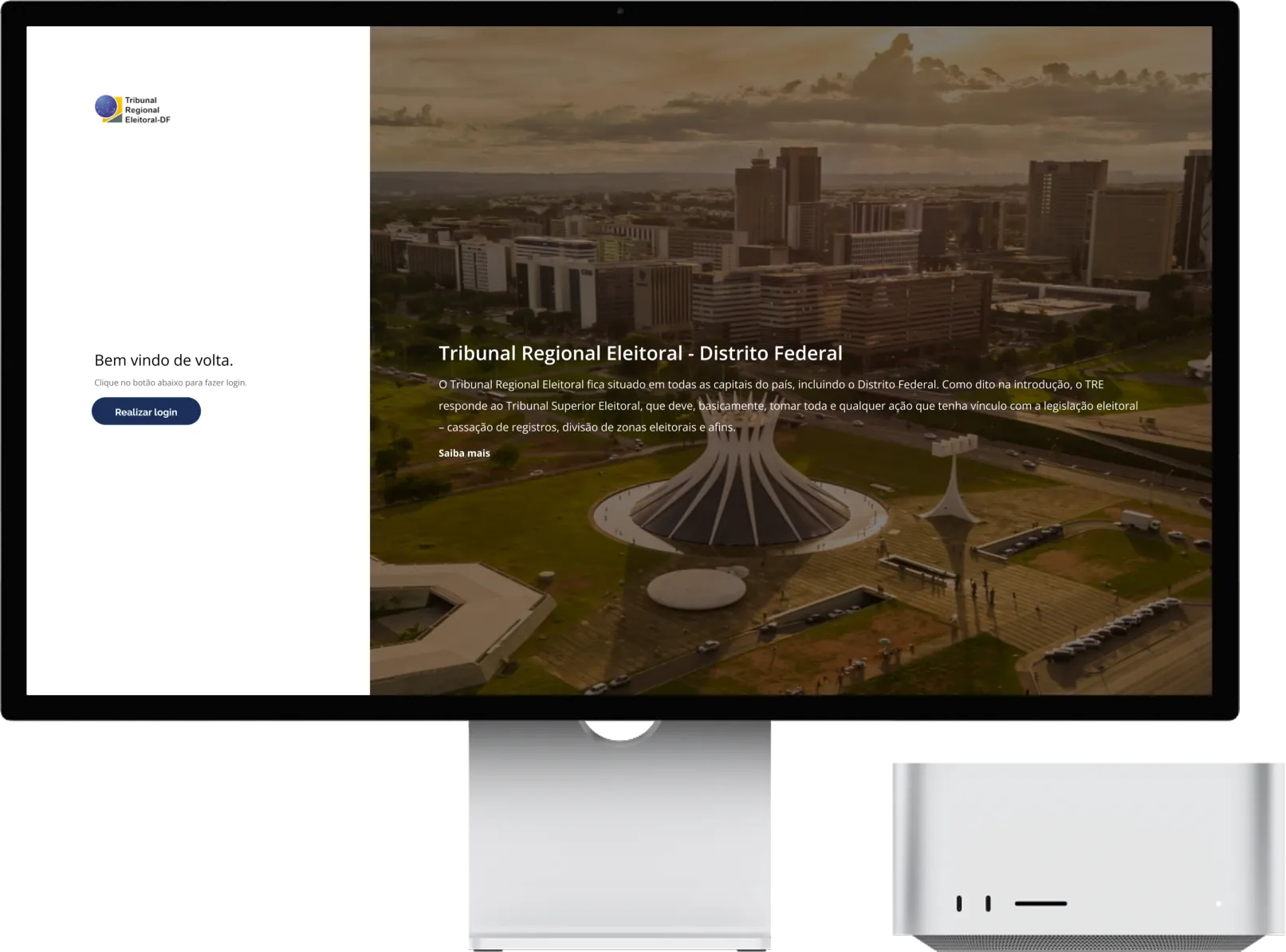
TRE-DF system login screen on a monitor

I centralized logging and tracking of TRE-DF requests into a clear platform, with a dashboard, review flow and audit log.

(1) Challenge

Demand management fragmented across several channels, with little visibility of deadlines and owners and no centralized history.

(2) My role

Product Designer: flows, information architecture and interface, based on the flow described in the system manual.

(3) Solution

A platform with a dashboard, request intake, review flow, audit and reports, following GOV.BR guidelines.

(4) Result

Centralized logging, more visibility into progress, better organization across departments and more transparency.

Context and problem

The Regional Electoral Court of the Federal District (TRE-DF), in partnership with the University of Brasília, developed a system to manage Demand Formalization Documents (DFDs). The platform centralizes logging, tracking and reviewing internal requests, and lets administrative units register needs, follow progress and keep a history.

Before it, administrative demand management was fragmented and relied on multiple communication channels. The high volume of requests called for a solution that made organization and prioritization easier for the departments in charge.

Hard to track Little clarity on the status of requests
Low visibility Deadlines and owners hard to see
No centralized history Requests scattered across channels
Manual processes Prone to errors and rework

Goal and my role

I worked as the Product Designer responsible for structuring the experience: flows, information architecture and interface. I analyzed the administrative flow described in the system manual and translated those rules into a clear, efficient digital experience for the institution's internal users.

Product goals

(1)
Log

Institutional requests in a structured way.

(2)
Track

The progress of requests.

(3)
Review

Make analyzing and approving proposals easier.

(4)
Audit

Transparency through audit logs.

(5)
Monitor

Visual indicators for requests.

Main challenges

Process complexity Institutional rules in simple flows
Data volume Visual hierarchy and readability
Different user profiles Experiences by access level
Need for traceability History of system actions

The solution

Monitoring dashboard

A main dashboard quickly shows the status of requests. Visual indicators help administrators track deadlines, request volumes and process progress.

Dashboard: request status, chart, events calendar and general notices. Click to enlarge.

Demand management

Users can set up and register request intakes, either quantitative or qualitative. The process guides the user step by step through the information needed to formalize the request.

Request intake setup: general settings and texts. Click to enlarge.

Review flow

Once submitted, managers review the proposals: they approve them, send them back for changes or ask for more information. The flow brings more control and organization to decision-making.

Quantitative DFD review: filters, table and approve or reject actions. Click to enlarge.

Audit log

To ensure transparency and traceability, the system keeps audit logs with the history of user interactions. They make it possible to track changes and stay compliant with institutional policies.

Audit log: history of interactions in the system. Click to enlarge.

Reports

Reports make it possible to analyze the volume of requests logged, their status and the performance of the management process.

Reports: volume, status and performance of demand management. Click to enlarge.

Impact of the solution

The platform's main benefits for TRE-DF:

Centralized logging All requests in one place
More visibility Process progress
Better organization Requests across departments
More transparency Institutional

What I learned

The project showed the importance of structuring institutional systems with a focus on organizing information and keeping flows clear. Working with internal requests meant turning formal processes and institutional rules into simple interactions.

It also reinforced the care needed with visual hierarchy and readability in systems that handle a lot of information. Adopting the GOV.BR guidelines was key to ensuring consistency, accessibility and familiarity for users.

Finally, the project reinforced how design can make internal processes clearer and more organized, making it easier to track and manage institutional requests.